Category: Blog

Leave a reply

Navigating the New Frontline: Cybersecurity Challenges and NATO’s Response in the Baltic Sea Region

Introduction: The Increasing Significance of the Baltic Sea in Hybrid Warfare

In recent years, the Baltic Sea has evolved from merely a strategic maritime route to a critical flashpoint in the evolving landscape of hybrid warfare. The integration of traditional military tactics with cyber operations, disinformation campaigns, and covert sabotage has made this region a hotspot for both state and non-state actors. Notably, the convergence of cyber and physical threats has raised urgency among regional stakeholders, prompting major security alliances like NATO to redefine their defense postures. The destabilizing effects are not limited to military implications; when vital undersea infrastructure such as communication and power cables are targeted, the ripple effects can undermine economic stability, energy security, and public trust in governmental capabilities.

Recent Incidents: Undersea Cable Damages and Cyber Espionage Tactics

The Baltic Sea’s undersea infrastructure has recently been subject to unprecedented acts of sabotage. Perhaps the most notable incident occurred in December 2024, when the Estlink 2 power cable linking Finland and Estonia sustained severe damage. Finnish authorities suspect that the rupture was incurred by the oil tanker Eagle S, allegedly part of Russia’s so-called “shadow fleet.” Reports indicate that the tanker, as documented on [Wikipedia](https://en.wikipedia.org/wiki/2024_Estlink_2_incident?utm_source=openai), might have dragged its anchor across the seabed, inadvertently or intentionally severing the cable. This incident is a stark reminder of how maritime assets can be repurposed or misused to achieve covert strategic objectives.

Adding to the complexity, in November 2024, two submarine cables—BCS East-West Interlink and C-Lion1—were damaged under circumstances that pointed towards intentional sabotage. Investigations highlighted the presence of the Chinese vessel Yi Peng 3 near the damage sites. Such events, detailed on [Wikipedia](https://en.wikipedia.org/wiki/2024_Baltic_Sea_submarine_cable_disruptions?utm_source=openai), not only intensify mistrust among regional players but also underline the sophisticated level of espionage and covert operations that characterize modern hybrid warfare.

NATO’s ‘Baltic Sentry’ Mission: Strategies, Deployment, and Impact

Recognizing the severity of these threats, NATO has taken strategic steps to reinforce the region’s security. The introduction of the ‘Baltic Sentry 2025’ mission signifies a comprehensive approach to securing the Baltic Sea region. This mission focuses on enhanced surveillance, improved cross-border intelligence sharing, and the coordinated deployment of specialized maritime assets. As part of the mission, NATO has increased the use of Airborne Early Warning and Control (AWAC) systems, unmanned aerial vehicles (UAVs), and mine hunters to monitor and secure critical undersea infrastructure. Details on these strategic shifts can be found on [NATO’s official review](https://www.nato.int/docu/review/articles/2024/08/28/reinforcing-resilience-natos-role-in-enhanced-security-for-critical-undersea-infrastructure/?utm_source=openai) and [VOA News](https://www.voanews.com/a/nato-eu-on-high-alert-as-undersea-cable-attacks-escalate-in-baltic/7956600.html?utm_source=openai).

The comprehensive planning and execution of the Baltic Sentry mission serve multiple purposes: deterring potential saboteurs, assuring member nations of rapid response capabilities, and providing a robust framework for future adaptations against new methodologies of hybrid warfare. The long-term impact is expected to not only secure infrastructure but also foster a sense of resilience among Baltic nations.

The Role of Cyberattacks and Disinformation Campaigns in Hybrid Warfare

Beyond physical sabotage, cyberattacks and disinformation campaigns have become increasingly integrated with traditional military confrontations in the Baltic Sea region. Cyber operations targeting critical infrastructure, government agencies, and communication networks serve to create confusion and undermine public trust. When cyberattacks are combined with strategic disinformation, adversaries can mask their true intentions and create a multilayered threat environment that complicates defensive responses.

Disinformation plays a dual role in hybrid warfare. It not only sows discord among allies but also acts as a force multiplier in physical confrontations by misdirecting intelligence efforts and eroding confidence in defensive measures. As various states invest in social media platforms and other digital channels for strategic messaging, the ability to control, counter, or manipulate narratives becomes pivotal in shaping both domestic and international policies.

Artificial Intelligence and Machine Learning in Cyber Defense

The complexity and volume of modern cyber threats have necessitated the deployment of advanced technological solutions. Artificial Intelligence (AI) and Machine Learning (ML) have rapidly ascended as essential components of cyber defense systems. These technologies enhance the ability to detect anomalous activities, predict potential cyber intrusions, and respond to threats in near real-time. NATO’s proactive steps towards embracing AI in their cyber defense strategies are largely facilitated by institutions such as the NATO Cooperative Cyber Defence Centre of Excellence (CCD COE) in Tallinn, Estonia. The CCD COE has been leading research and development efforts since its inception in 2008, and its initiatives include developing AI-driven tools for threat detection, incident response, and mitigation.

By integrating AI and ML into their operational frameworks, NATO aims not only to automate defensive measures but also to systematically improve their response times against cyber onslaughts. The synergy between human expertise and machine efficiency creates a robust paradigm of defense that is both adaptive and resilient. This integration is well documented on [Wikipedia’s page for the Cooperative Cyber Defence Centre of Excellence](https://en.wikipedia.org/wiki/Cooperative_Cyber_Defence_Centre_of_Excellence?utm_source=openai).

Evaluating NATO’s Response Effectiveness and Future Challenges

NATO’s multifaceted response to hybrid and cyber warfare in the Baltic Sea region has been both comprehensive and dynamic. The deployment of enhanced surveillance technologies, the initiation of the Baltic Sentry mission, and the incorporation of AI and ML strategies form a robust response to contemporary threats. However, the nature of hybrid warfare is continuously evolving, and so too must NATO’s strategies. The challenges ahead include rapidly adapting to new threat vectors, maintaining seamless cooperation among member states, and ensuring that defense measures keep pace with the increasingly sophisticated techniques employed by adversaries.

While NATO’s increased presence and strategic initiatives have provided reassurance, the alliance must continuously refine its operational doctrines and invest in emerging technologies. Future challenges also include countering the proliferation of cyber capabilities among non-state actors and addressing the persistent threat of state-sponsored hybrid attacks. Independent analyses, such as those found in recent reports by Reuters and the Financial Times, emphasize that while progress has been made, the evolving threat landscape demands vigilance and continual innovation.

Legal, Ethical, and Political Considerations in Cyber Warfare

The rapid evolution of cyber and hybrid warfare has inevitably raised several legal, ethical, and political questions. Legally, the attribution of cyberattacks remains fraught with challenges—identifying the perpetrator or establishing sufficient evidence for international prosecutorial measures is no small feat. Ethically, the use of cyber tactics that can result in civilian hardship or economic instability calls into question the proportionality and humanitarian implications of such strategies.

Politically, alliances like NATO must navigate the complex interplay between national sovereign interests and collective security imperatives. The implementation of countermeasures against cyber threats while adhering to international law requires a delicate balance between assertiveness and diplomacy. As the international community scrutinizes the measures taken in response to incidents like the 2024 Baltic Sea cable disruptions, it becomes clear that reinforcing legal frameworks and ethical guidelines will be as important as technical upgrades in maintaining legitimacy and effectiveness.

Broader Implications for Regional Stability and International Security

The repercussions of ongoing hybrid warfare extend far beyond immediate military concerns. Economic ramifications, such as those following the targeted disruptions of critical undersea cables, can have a cascading effect on energy supplies, financial markets, and overall regional stability. The Baltic Sea incidents not only highlight vulnerabilities in physical infrastructure but also expose the interconnected nature of modern security challenges—from cyber intrusions to geopolitical maneuvering.

International security now hinges on sustained collaboration among countries, robust intelligence sharing, and strategic investments in advanced technologies. The ripples of these incidents force a reevaluation of security paradigms that once centered solely on physical borders. As nations build resilience against multifaceted attacks, a comprehensive defense strategy must intertwine cyber security, diplomatic coordination, and economic safeguards. This integrated approach is increasingly recognized as essential for preserving the long-term stability of not just the Baltic region, but the wider international community.

Conclusion: Strengthening Resilience and Future Outlook

In summary, the evolving landscape of hybrid and cyber warfare in the Baltic Sea region represents both an unprecedented challenge and a call to innovative action. The increasing prevalence of undersea cable sabotage, cyber espionage, and associated disinformation campaigns necessitates a reevaluation of defense strategies. NATO’s response—anchored by the Baltic Sentry mission and bolstered by the integration of artificial intelligence and advanced surveillance capabilities—demonstrates a commitment to safeguarding the region’s critical infrastructure and maintaining stability.

Yet, looking to the future, the complex interplay of legal, ethical, and political factors will require constant vigilance and adaptive strategies. Strengthening resilience will depend on the continuous evolution of technical defenses, enhanced cooperation among international partners, and a renewed focus on developing comprehensive legal frameworks for cyber operations. By learning from recent incidents and remaining agile in the face of emerging threats, European security stakeholders can pave the way for a safer, more stable future.

For further reading on the subject, consider exploring related reports such as [Sweden seizes vessel suspected of ‘sabotage’](https://apnews.com/article/63da5ef0d577bca12bbe118d527d3a14?utm_source=openai), [Subsea sabotage puts European power at risk](https://www.ft.com/content/6c5c1c02-06b1-4ce7-a7e8-24ed5b2ac171?utm_source=openai), and [Finland completes probe into Baltic Sea cable damage](https://www.reuters.com/business/media-telecom/finland-completes-probe-into-baltic-sea-cable-damage-suspects-tanker-crew-2025-06-13/?utm_source=openai). These sources provide additional context and depth to the challenges and responses detailed in this blog post.


Leave a reply

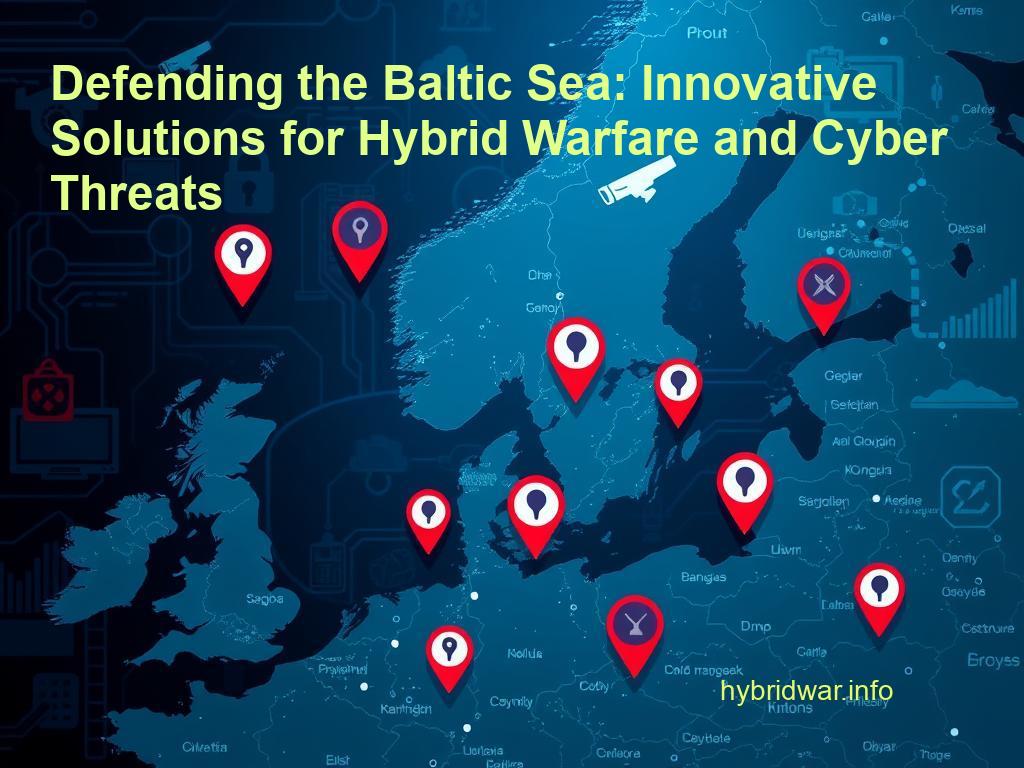
Defending the Baltic Sea: Innovative Solutions for Hybrid Warfare and Cyber Threats

Introduction: The Growing Threat Landscape in the Baltic Sea Region

In recent years, the Baltic Sea region has transitioned from a peaceful international maritime corridor to a zone facing complex and evolving security challenges. Hybrid warfare—a multifaceted blend of conventional and unconventional tactics—has emerged as a key method to weaken regional stability. The hybrid threat encompasses everything from cyberattacks and physical sabotage to psychological operations and disinformation campaigns. These tactics are deliberately designed to impose uncertainty, erode public trust in institutions, and undermine critical infrastructure, which has historically been a cornerstone of both regional prosperity and security. The Baltic Sea, with its strategic position and dense network of undersea cables, pipelines, and energy grids, is especially vulnerable to such multifarious threats.

Understanding Hybrid Warfare: Definitions and Key Tactics

Hybrid warfare is not solely a military engagement; it is a complex strategy that blends kinetic military actions with asymmetrical tactics. It also involves an extensive use of tactical deception, economic measures, cyber manipulation, and information operations. Elements of hybrid warfare include:

1. Cyberattacks – targeting digital infrastructures to disrupt services and intimidate the public.
2. Sabotage – physical attacks on critical infrastructure like undersea cables and pipelines.
3. Disinformation campaigns – the deliberate spread of misleading narratives to fracture political consensus and public trust.

These elements often work in unison to create a strategic environment where adversaries gain both operational and psychological advantages. For further details on the nuances of hybrid warfare, recent explorations into gray zone tactics (as seen in articles discussing undersea cable sabotage and cyberattacks, such as the piece on the UK’s defense law revamp [UK Defense Laws Revamp](https://www.pcgamer.com/hardware/uk-looking-to-revamp-defense-laws-as-undersea-cable-sabotage-and-cyber-attacks-create-gray-zone-threats/?utm_source=openai)) have shed light on the intricate interplay of these tactics.

Recent Incidents Highlighting Vulnerabilities

Recent events have starkly highlighted the tangible nature of these cyber and physical threats. Notably:

– In December 2024, the Estlink 2 submarine power cable, which connects Estonia with Finland, experienced an unplanned failure. The incident, reducing the cross-border capacity dramatically from 1,016 to 358 MW, is widely suspected of being a deliberate act of sabotage. Reports suggest that the oil tanker Eagle S, allegedly linked to Russia’s shadow fleet, might have intentionally damaged the cable by dragging its anchor. This episode underscores how even routine maritime operations can be manipulated into acts of hybrid warfare. More on the incident can be found at [2024 Estlink 2 incident](https://en.wikipedia.org/wiki/2024_Estlink_2_incident?utm_source=openai).

– Similarly, in October 2023, damage to the Balticconnector—a gas pipeline interlaced with telecommunication cables linking Finland and Estonia—brought the vulnerability of such critical infrastructures into sharp focus. Although the container ship NewNew Polar Bear was initially reported to have caused accidental damage by its anchor, ongoing investigations by Estonian and Finnish authorities suggest that these incidents might not be purely coincidental. More detailed information about this disruption is available at [Balticconnector](https://en.wikipedia.org/wiki/Balticconnector?utm_source=openai).

These developments have made it clear that the Baltic Sea’s undersea infrastructure is not immune from the modern techniques of hybrid warfare. In response, initiatives such as NATO’s Baltic Sentry mission have been rolled out to protect against sabotage by deploying a mix of naval drones, submarines, maritime patrol ships, and aircraft.

Critical Infrastructure at Risk: Undersea Cables and Pipelines

Undersea cables and pipelines form the lifelines for energy transfer and digital communication in the Baltic Sea region, yet they are increasingly susceptible to both deliberate sabotage and accidental damage. Their strategic importance makes them prime targets for adversaries employing hybrid warfare tactics.

Recent incidents illustrate this vulnerability vividly. The intentional damage of the Estlink 2 cable and Balticconnector pipeline has highlighted how physical manipulation amid routine maritime operations can be weaponized to achieve geopolitical goals. The integration of these facilities in everyday economic and energy networks means that any disruption can have far-reaching consequences, potentially crippling industries and inhibiting cross-border collaboration.

To counter these risks, monitoring and reinforcing strategies are being considered. Defense projects such as autonomous sensor networks and AI-powered surveillance systems can potentially provide continuous monitoring and early warning signals to detect and counteract intrusions or sabotage attempts. NATO’s Baltic Sentry, for instance, is actively developing measures to protect these infrastructures by harnessing a blend of advanced maritime monitoring technologies ([NATO Baltic Sentry](https://www.ft.com/content/3447d821-ea41-4c85-b403-e7cc7cc49b4c?utm_source=openai)).

Cyberattacks on Government and Energy Sectors

While physical sabotage of infrastructure remains a significant threat, the digital dimension of hybrid warfare is becoming even more critical. Cyberattacks on government networking systems, energy grids, and industrial operations have the potential to paralyze essential services, allowing manipulation of information flow and operational capacities at a large scale.

Government entities and energy supply chains are particularly vulnerable due to legacy systems, underinvestment in cybersecurity, and complex interdependencies between various networked infrastructures. An attack on one element can rapidly cascade, affecting entire sectors. Developers and innovators are recognizing an urgent need for AI-driven cybersecurity tools that can monitor threats in real time, identify breaches as they happen, and neutralize risks before serious consequences manifest.

The incident discussions in the news regarding the wave of cyberattacks targeting critical sectors in Europe also suggest that proactive and intelligent cybersecurity measures are not just beneficial but essential for maintaining state and economic integrity ([Western Officials on Sabotage in Europe](https://apnews.com/article/d61887dd3ec6151adf354c5bd3e6273e?utm_source=openai)).

The Role of Disinformation and Influence Campaigns

Disinformation has evolved into an indispensable tool in the hybrid warfare playbook. In the Baltic Sea region, where public opinion can be shaped as much by digital narratives as by physical events, the strategic release of inaccurate or misleading information can destabilize societies and political processes.

State and non-state actors alike use social media, online forums, and other digital platforms to disseminate false information, thereby eroding trust in governmental institutions and inciting public unrest. One notable example is the use of AI-driven platforms, like Cyabra, which specialize in detecting and counteracting disinformation by identifying fake profiles and harmful narratives. For more details on Cyabra and its operations, you can refer to [Cyabra](https://en.wikipedia.org/wiki/Cyabra?utm_source=openai).

The effects of disinformation are compounded in the digital era where rapid, unchecked information-sharing has become a norm. With the increasing use of AI tools in both propagating and detecting disinformation, the stakes for maintaining information integrity have never been higher.

Opportunities for Defense Industry Startups

The evolving threat landscape in the Baltic region is not without opportunity. For startups in the defense industry, it represents a fertile ground for innovation, particularly in technologies designed to secure critical infrastructures and counteract hybrid warfare tactics. These companies can play a pivotal role in developing next-generation security solutions that integrate advanced AI, robotics, and networked communication systems.

Innovative defenses such as autonomous surveillance drones, undersea cable monitoring systems, and predictive cybersecurity models have already begun attracting significant attention. Collaborations between governments, established defense contractors, and agile startups are essential to bridge gaps in current technology and counteract sophisticated threats. Startups that excel in agile development and rapid deployment, particularly in AI and robotics, are poised to design customized solutions capable of responding to the unique regional challenges.

Innovative Technologies for Infrastructure Protection

Innovation in technology is the foremost ally in the fight against hybrid threats. With the advent of robust AI-driven platforms, detecting anomalies in communication networks and energy grids has become more feasible and efficient. One example is the utilization of machine learning models that continually assess risk factors and predict potential points of failure or sabotage on critical infrastructures.

Additionally, the integration of autonomous systems, such as the Danish military’s use of robotic sailboats (often referred to as “Voyagers”) for maritime surveillance, offers a glimpse into the future of infrastructure protection. These uncrewed vessels are equipped with state-of-the-art sensors that can detect subtle changes in the maritime environment, providing continuous monitoring and rapid threat response ([Danish Robotic Sailboats](https://apnews.com/article/bfa31c98cf7c93320115c0ad0e6908c5?utm_source=openai)).

Such advancements underscore the importance of continuous investment in R&D not just to patch existing vulnerabilities, but to foresee and preempt future threats. The infusion of automated systems with traditional monitoring methods creates layered security that is essential in the increasingly contested Baltic maritime environment.

Counter-Disinformation Strategies and Tools

Addressing the digital component of hybrid warfare requires an equally advanced set of countermeasures. Innovative platforms that harness the power of artificial intelligence can detect, debunk, and ultimately neutralize disinformation in real time. These tools work by analyzing vast streams of data for patterns that indicate coordinated inauthentic behavior.

The success stories of platforms like Cyabra highlight the potential of AI-driven disinformation countermeasures. By quickly identifying and flagging harmful content, these systems safeguard the public discourse from manipulation and help rebuild trust in authentic information streams. They are also a critical resource for governments and private sectors seeking to combat the sustained flow of fake news and manipulated narratives.

Constant adaptation is necessary, as adversaries continuously evolve their methods. Integrating counter-disinformation measures into broader cybersecurity strategies ensures that digital defenses remain robust and responsive.

Building Collaborative Defense Platforms

No single organization can effectively counter the multifaceted threats posed by hybrid warfare. Collaborative defense platforms that bring together national governments, NATO allies, private-sector innovators, and academic researchers are crucial. These platforms foster information sharing and a coordinated response to emerging threats, leveraging collective expertise.

Such collaboration could lead to the development of joint operational centers that centralize threat assessments and streamline responses, particularly in high-stakes scenarios involving critical infrastructure attacks. This harmonized approach not only fosters trust among partners but also ensures that resources are allocated efficiently to where they are needed most.

Recent NATO initiatives, including the Baltic Sentry mission, provide a model for such cooperation by integrating various assets—ranging from unmanned systems to advanced surveillance tools—into a cohesive defensive posture. This coordinated strategy is essential to counter the hybrid threats effectively and ensure resilience.

Future Outlook: Strengthening Regional Resilience

Looking ahead, the challenges in the Baltic Sea region are set to intensify, but so too are the opportunities for technological and strategic advancements. As hybrid warfare tactics grow in sophistication, a proactive and innovative approach will be critical.

Key to future resilience is the continued investment in advanced monitoring systems, cybersecurity defenses, and collaborative platforms that quickly adapt to emerging threats. The integration of multi-domain capabilities—from physical surveillance using robotic assets to real-time data analytics using AI—will be pivotal.

Governments, defense industries, and private startups must work together to cultivate an environment where innovation meets necessity. By leveraging technological advancements and collaborative partnerships, the Baltic Sea region can transform its vulnerabilities into strengths, ensuring that it remains secure against both current and future hybrid threats.

In conclusion, addressing the hybrid warfare threats prevailing in the Baltic Sea region requires comprehensive measures that span both physical and digital arenas. From undersea cables and pipelines to sophisticated cyber defenses and counter-disinformation tools, the path forward lies in partnerships and innovative technology solutions. By harnessing the expertise and agility of defense startups alongside established government initiatives, the region can enhance its resilience and safeguard its critical infrastructure in the face of evolving hybrid challenges.


Leave a reply

Understanding Russia’s Hybrid Warfare: Cyber Tactics, Disinformation, and Global Impact

Introduction to Hybrid Warfare and Russia’s Strategic Shifts
Russia’s approach to hybrid warfare represents a paradigm shift in modern conflict, blending conventional military strategies with covert operations such as cyberattacks, disinformation campaigns, and social media manipulation. This multifaceted tactic enables Russia to pursue geopolitical objectives while avoiding the overt triggers of conventional military conflict. Traditionally known for its conventional power play, Russia has increasingly embraced covert digital methods to shape narratives and destabilize adversaries, especially since events such as its full-scale invasion of Ukraine in 2022. These tactics not only target Western democracies but have shown profound implications for non-Western societies as well, signaling a broadening scope of influence.

Cyberattacks and Espionage: The Digital Frontlines
In the digital arena, Russia has aggressively leveraged cyberattacks and espionage to target critical infrastructure, governments, and private organizations. Cyber operations have been meticulously planned and executed to undermine both political stability and public trust. Recent research highlights the escalation of covert activities, including high-profile cyberattacks that blend sabotage with espionage ([Russian hybrid warfare in Europe (2022–present)](https://en.wikipedia.org/wiki/Russian_hybrid_warfare_in_Europe_%282022%E2%80%93present%29?utm_source=openai)). In addition to direct attacks, methods such as infiltration of government networks and stealing sensitive data underpin Russia’s long-term strategy, thereby forcing nations to reevaluate their cybersecurity protocols while facing an adversary that thrives in the digital shadows.

Disinformation Campaigns: Creating Fake Narratives
Disinformation is a cornerstone of Russia’s hybrid strategy. By fabricating narratives and presenting carefully crafted alternative realities, Russia seeks to fracture societal trust and undermine democratic institutions. A notable example is the “Doppelgänger” campaign initiated in 2022, where operatives generated fake versions of established news outlets such as Le Monde and Fox News ([Doppelganger (disinformation campaign)](https://en.wikipedia.org/wiki/Doppelganger_%28disinformation_campaign%29?utm_source=openai)). This deliberate creation of fake news platforms not only dilutes credible information but also creates confusion and distrust among citizens. The strategic deployment of fake narratives aims to delegitimize opposition views and fragment discourse, making it difficult for societies to form a unified response. This tactic has been mirrored in various parts of the world, demonstrating the expansive reach of Russia’s information warfare.

Social Media Manipulation and Troll Farms
Beyond traditional digital espionage, Russia has excelled in exploiting social media platforms to propagate its agendas. Troll farms and state-sponsored bots are systematically deployed to amplify messages, discredit opponents, and skew public perception. By using real-life influencers, AI-generated ads, and simulated grassroots movements, these operations create the illusion of widespread support for pro-Russian narratives. In the United States and Europe, covert operations have involved influencing the political climate by leveraging right-wing influencers and engaging in stealth campaigns designed to sway public opinion ([A New Front in the Meme Wars](https://www.theatlantic.com/technology/archive/2024/09/new-generation-cyberwarfare/679870/?utm_source=openai)). Consequently, these activities have redefined the terrain of digital propaganda, making the battlefield as much about online perceptions as it is about physical territories.

Recent Developments in Russian Hybrid Strategies
Recent events have revealed an evolution in Russian hybrid warfare tactics, characterized by a more sophisticated and rapidly adapting approach. The emergence of new tools such as memes and other viral digital content in state-sponsored operations indicates a shift towards more virulent and culturally resonant messaging ([A New Front in the Meme Wars](https://www.theatlantic.com/technology/archive/2024/09/new-generation-cyberwarfare/679870/?utm_source=openai)). Moreover, there is a growing collaboration between cyber criminals and state actors, as highlighted by reports like “Cyber criminals are increasingly helping Russia and China target the US and allies, Microsoft says” ([AP News](https://apnews.com/article/d3a22dd2dcea32615ac15ed4fb951541?utm_source=openai)). These developments suggest that Russia is not only refining its operational tactics but also expanding its ecosystem of hybrid threats, thereby complicating the defensive strategies available to its adversaries.

Impact on Non-Western Societies: Africa, Asia, and Beyond
While the West often garners most attention in discussions on hybrid warfare, the impact on non-Western societies is equally significant. In regions such as Africa and Asia, Russian disinformation and cyber operations are strategically tailored to exploit local tensions and geopolitical vulnerabilities. In the Middle East, for instance, Russian narratives have been used to fuel discord, particularly during periods of conflict as seen in the 2023 Israel-Hamas conflict. Pro-Palestinian hacktivist groups have targeted critical infrastructure in Israel, an operation influenced by Russian disinformation channels ([Hybrid Warfare: How Cyber Warfare is Transforming International Relations](https://www.sia-partners.com/en/insights/publications/hybrid-warfare-how-cyber-warfare-transforming-international-relations?utm_source=openai)). The nuanced approach in these markets underscores Russia’s ability to customize tactics to local conditions, making the threat of hybrid warfare a truly global phenomenon.

Long-Term Psychological Effects on Populations
The psychological ramifications of hybrid warfare go beyond immediate misinformation and cyber threats. The persistent barrage of disinformation, coupled with orchestrated cyber intrusions, results in long-term stress and mistrust among the affected populations. This erosion of confidence can lead to societal fragmentation, as communities struggle to discern truth from manipulation. Over time, such conditions may breed cynicism and apathy, thereby undermining civic engagement and resilience. The enduring nature of these psychological impacts often leaves societies vulnerable to future manipulation, creating a cyclical challenge for governments and institutions.

Countermeasures and Building Resilience
In response to these pervasive threats, governments and international organizations are actively developing countermeasures aimed at building resilience. The European Union, for example, has implemented a sanctions framework that targets destabilizing activities, including cyberattacks and disinformation ([Hybrid threats – Consilium](https://www.consilium.europa.eu/en/policies/hybrid-threats/?utm_source=openai)). National initiatives, such as France’s ComCyber established in 2017, are focused on countering these information warfare tactics through specialized units dedicated to mitigating disinformation ([Hybrid Warfare: How Cyber Warfare is Transforming International Relations](https://www.sia-partners.com/en/insights/publications/hybrid-warfare-how-cyber-warfare-transforming-international-relations?utm_source=openai)). Building public resilience through digital literacy programs, public awareness campaigns, and robust cybersecurity defenses is critical. These measures empower citizens to critically evaluate the information they encounter and safeguard themselves against manipulation.

The Role of Private Sector in Combating Hybrid Warfare
The private sector plays an indispensable role in the fight against hybrid warfare. Technology companies, social media giants, and cybersecurity firms are on the frontlines of identifying and mitigating disinformation campaigns and cyber threats. Collaboration between governments and private enterprises has proven vital in monitoring digital spaces and stopping the spread of malicious content. Private corporations not only help in innovating advanced defensive technologies but also contribute to public education and digital literacy initiatives. Their investment in cybersecurity research and development is a cornerstone in formulating an effective digital defense against state-sponsored hybrid operations.

Legal and Ethical Considerations in Cyber Operations
Navigating the legal and ethical dimensions of hybrid warfare is a formidable challenge. As governments develop countermeasures to deter cyber intrusions and disinformation, issues regarding privacy, civil liberties, and the proper use of surveillance technologies come to the forefront. Legal frameworks must evolve rapidly to address tactics that blur the lines between military operations and criminal cyber activities. Ethical debates also arise from the need to balance national security measures with the safeguarding of democratic freedoms. Policymakers face the daunting task of regulating these actions without inadvertently suppressing dissent or stifling the free flow of information.

Conclusion: Preparing for Future Hybrid Threats
In an era where information is as decisive as physical might, Russia’s hybrid warfare strategy illustrates the need for vigilance and adaptability. The fusion of cyberattacks, disinformation, and social media manipulation represents a formidable challenge that transcends geographical and ideological boundaries. As nations confront this evolving threat landscape, it is imperative to invest in robust cybersecurity infrastructures, foster public awareness, and continually update legal frameworks. By understanding the intricate dynamics of hybrid warfare, societies can better prepare for future extant threats while protecting the integrity of their democratic institutions. The battle against hybrid warfare is ongoing, and only through collective, cross-sector collaboration can a resilient defensive posture be maintained.


Leave a reply

Hybrid Warfare in the Baltic Sea Region: Threats, Responses, and Future Challenges

Introduction: The Strategic Significance of the Baltic Sea Region

The Baltic Sea region holds an unparalleled strategic importance in European security architecture. Not only is it a vital corridor for energy transit, trade, and military maneuvering, but its unique geographic position also renders it a hotspot for the geopolitical tug-of-war between regional and global powers. The area’s complex history, marked by shifting alliances and contested sovereignties, makes it an ideal theater for hybrid operations. Since the Cold War, and even more so in recent decades, the Baltic Sea has witnessed an increased deployment of multipronged threats that blend traditional military tactics with unconventional methods. This blog post delves into these dynamics, illustrating how the security of the Baltic Sea is critical not only for regional stability but also as a linchpin in the broader European and global security landscape.

Understanding Hybrid Warfare: Definitions and Tactics

Hybrid warfare represents a convergence of conventional military tactics with nontraditional methods including cyberattacks, disinformation campaigns, sabotage, and covert intelligence operations. This evolving approach allows state and non-state actors to undermine an adversary’s capabilities without engaging in full-scale open conflict. In the contemporary security arena, such tactics are deliberately ambiguous, making attribution difficult and response measures complex. The definition of hybrid warfare, therefore, extends beyond the military domain into the realms of politics, economics, and social stability. This integrated form of conflict aims to disrupt decision-making and erode public trust in state institutions. Scholars and policymakers alike are increasingly focusing on hybrid warfare as a paradigm that challenges existing defensive frameworks. The tactics observed in the Baltic Sea region serve as a microcosm of this broader strategic philosophy.

Russia’s Hybrid Operations in the Baltic: Cyberattacks and Disinformation

Russia has been at the forefront of deploying hybrid methods in an attempt to destabilize the Baltic region. One of the primary tools in its arsenal is cyber warfare. Russian intelligence services have orchestrated a series of sophisticated cyber-espionage and cyber disruption campaigns targeting critical government networks, energy infrastructures, and key sectors such as healthcare in the Baltic states. An infamous example of these cyber operations is reflected in the activities of the so-called “Doppelgänger” network, which has been engineered to produce counterfeit news outlets aimed at spreading pro-Kremlin propaganda. These disinformation campaigns not only seek to polarize societies but also aim at eroding public trust in democratic institutions. More on these tactics can be read in depth at Wikipedia’s detailed account of Russian hybrid warfare in Europe (https://en.wikipedia.org/wiki/Russian_hybrid_warfare_in_Europe_%282022%E2%80%93present%29?utm_source=openai).

Sabotage of Critical Infrastructure: Undersea Cables and Maritime Security

In addition to cyber operations, sabotage of physical infrastructure is a critical element of hybrid warfare in this region. The sabotage incidents along critical undersea assets provide stark evidence of how multifaceted these operations are. The explosion incidents in 2022, which ruptured the Nord Stream 1 and 2 gas pipelines, are a prominent illustration of this approach. Reports have suggested that these attacks were executed by elements operating from what some analysts refer to as Russia’s “shadow fleet”—a network capable of circumventing Western sanctions through ambiguous ownership structures. More recently, in 2023, the Balticconnector gas pipeline and telecom cables linking Estonia with Finland and Sweden were compromised following an incident involving a Chinese vessel. Investigations indicated that Russian intelligence might have influenced the vessel’s captain to inadvertently trigger the sabotage by dragging its anchor along the Baltic seabed. These events underscore the sophisticated nature of hybrid tactics that combine stealth, misdirection, and international proxies. For further insights, refer to the American University report on securing critical infrastructure (https://www.american.edu/sis/centers/transatlantic-policy/articles/20250424-securing-the-depths.cfm?utm_source=openai).

NATO’s Response: The Baltic Sentry Mission and Regional Security Enhancements

Confronted with an array of hybrid threats, NATO has rapidly evolved its strategic posture in the Baltic Sea region. A pivotal component of its response strategy has been the launch of the Baltic Sentry Mission in January 2025. This operation is designed to protect critical undersea infrastructure by deploying a diverse array of assets, including frigates, maritime patrol aircraft, and naval drones, in addition to integrating national surveillance systems. Complementing this, NATO established the Critical Undersea Infrastructure Coordination Cell in February 2023 to foster cooperation among its Allies, partners, and private sector stakeholders. Furthermore, the establishment of the Maritime Centre for the Security of Critical Undersea Infrastructure in May 2024 underscores the alliance’s commitment to preempting sabotage activities. Detailed information on these initiatives can be found on NATO’s official website (https://www.nato.int/cps/en/natohq/70759.htm?utm_source=openai). These robust measures reflect NATO’s evolving doctrine, which addresses the hybrid nature of modern threats by reinforcing multi-layered defense mechanisms.

Intelligence Gathering and Countermeasures in the Baltic States

Effective response to hybrid warfare demands timely and accurate intelligence. In the Baltic states, efforts to bolster cyber intelligence and physical security measures have been significantly enhanced in recent years. Counter-intelligence units are now collaborating more closely with international partners to share critical information about potential threats, particularly those arising from sophisticated cyber intrusions. The evolution of intelligence operations in this region mirrors the changing nature of warfare where cross-border cooperation plays a key role. Governments have invested in both human intelligence and technological solutions, such as advanced surveillance systems and AI-based threat detection platforms, to monitor potential breaches and unusual maritime activities. These efforts are instrumental in mitigating the risks posed by both overt sabotage and covert operations orchestrated by hybrid adversaries.

Emerging Content Gaps: Civil Society, Effectiveness of Countermeasures, and Non-State Actors

While state actors have received considerable attention, hybrid warfare also exposes significant vulnerabilities in civil society. Recently, emerging research highlights a gap in understanding the profound impact that the spread of disinformation has on social cohesion. Grassroots organizations, including groups such as Propastop, the Czech Elves, and the Baltic Elves, are playing an essential role in combating false narratives and countering disinformation campaigns. These non-state actors leverage advanced technologies to monitor social media, analyze the propagation of fake news, and swiftly alert the public to unverified information. Moreover, platforms like NorthSeal, operational since January 2025, are pioneering efforts to track suspicious maritime activity and coordinate rapid responses among North Sea nations. Although NorthSeal is primarily focused on the North Sea, its framework provides valuable insights into how similar collaborative strategies could enhance security in the Baltic Sea (https://en.wikipedia.org/wiki/NorthSeal?utm_source=openai). This emerging convergence of state and non-state efforts marks a critical frontier for research and operational improvement in hybrid defense tactics.

Future Challenges and the Long-Term Impact on European and Global Security

Looking ahead, the challenges posed by hybrid warfare are set to intensify as technology evolves and geopolitical rivalries become more entrenched. Future threats are likely to exploit new domains, leveraging artificial intelligence, quantum computing, and next-generation cyber tools. The Baltic Sea region, with its concentration of critical infrastructure and strategic maritime routes, will remain a focal point for potential disruptions. As hybrid adversaries refine their tactics, European security actors must invest in adaptive and resilient response strategies. Building a comprehensive counter-hybrid warfare framework will require continuous innovation, robust international collaboration, and an integrated approach that melds cyber, physical, and intelligence operations. The unfolding nature of these future challenges necessitates that policymakers craft long-term strategies that not only address immediate risks but also anticipate and mitigate emerging vulnerabilities.

Conclusion: Strengthening Resilience Against Hybrid Threats in the Baltic Sea

In the face of a rapidly evolving hybrid threat landscape, resilience is paramount. The multifaceted nature of hybrid warfare, characterized by a blend of cyberattacks, disinformation, infrastructure sabotage, and intelligence operations, mandates a coordinated and comprehensive response. The Baltic Sea region, due to its inherent strategic significance, will continue to be a battleground for these unconventional conflicts. By drawing on a combination of state-of-the-art defense technologies, enhanced intelligence gathering, and proactive measures by NATO and regional organizations, stakeholders can fortify the region against future threats. The ongoing collaboration between governmental actors, international alliances, and civil society groups serves as a robust foundation, but much remains to be done. Sustained, adaptive, and forward-thinking strategies will be essential to secure the safety and stability of the Baltic Sea and, by extension, contribute to a wiser, more secure global environment.


Leave a reply

Unveiling Modern Threats in the Baltic Sea Region: Hybrid Warfare, Cyberattacks, and the Rise of AI

Introduction: The Strategic Significance of the Baltic Sea Region

The Baltic Sea region has emerged as a critical geopolitical hotspot due to its strategic location, historical contestations, and modern security challenges. As global power dynamics shift and as regional capabilities evolve, the Baltic Sea serves not only as a prominent trade route but also as a front line in modern hybrid conflicts. The region’s proximity to major world powers and its role in international trade has rendered it a focal point for the convergence of military strategy, cyber warfare, and technological innovations such as artificial intelligence. With robust economies and a network of critical infrastructures, nations bordering the Baltic are highly vulnerable yet fiercely protective of their sovereignty.

Hybrid Warfare Tactics Employed by Russia

Russia’s approach to modern conflict in the Baltic Sea region embodies the multifaceted nature of hybrid warfare. Rather than engaging solely in conventional military confrontations, Russia has honed a strategy that integrates kinetic military action, cyber operations, physical sabotage, and calculated disinformation campaigns. Instances of physical sabotage, including the arson attacks on factories and warehouses linked to Ukraine’s military aid, highlight a blend of covert and overt tactics ([Russian Hybrid Warfare in Europe (2022–present)](https://en.wikipedia.org/wiki/Russian_hybrid_warfare_in_Europe_%282022%E2%80%93present%29?utm_source=openai)). In parallel, state-sponsored hacker groups have successfully infiltrated critical infrastructures including government networks, railway systems, hospitals, and energy grids, using cyberattacks to destabilize strategic targets. The deliberate spread of disinformation, notably through sophisticated networks like the “Doppelgänger” network, further underscores Russia’s commitment to influencing public opinion and sowing societal discord.

Recent Cyberattacks and Infrastructure Sabotage in the Baltic Sea

The Baltic Sea region has not only seen traditional military maneuvers but also an increasing reliance on cyber operations to weaken adversaries. A notable case is the Estlink 2 incident in December 2024, where an unplanned failure of the submarine power cable caused a dramatic reduction in Estonia–Finland cross-border capacity from 1,016 to 358 MW. Investigations suggest that this sabotage may have been orchestrated by a vessel believed to be part of Russia’s shadow fleet ([2024 Estlink 2 incident](https://en.wikipedia.org/wiki/2024_Estlink_2_incident?utm_source=openai)). Similarly, in November 2024, two vital submarine telecommunication cables—the BCS East-West Interlink and C-Lion1—suffered disruptions potentially induced through a coordinated operation linking Russian intelligence and a Chinese vessel. These incidents highlight the sophisticated blend of cyber and physical sabotage designed to undermine regional stability ([2024 Baltic Sea submarine cable disruptions](https://en.wikipedia.org/wiki/2024_Baltic_Sea_submarine_cable_disruptions?utm_source=openai)).

Disinformation Campaigns and Societal Divisions

Disinformation has emerged as one of the most potent weapons in the hybrid warfare arsenal. In the Baltic Sea region, state-sponsored campaigns have effectively exploited societal divisions by spreading misleading narratives designed to fracture trust in public institutions and democratic processes. Such operations are not only intended to confuse and demoralize the target populations but also to create lasting divisions that can be exploited over time. This manipulation of information environments is seen in the pro-Kremlin propaganda efforts, where fabricated news outlets mimic reputable media, thereby blurring the line between truth and propaganda ([Russian Hybrid Warfare in Europe (2022–present)](https://en.wikipedia.org/wiki/Russian_hybrid_warfare_in_Europe_%282022%E2%80%93present%29?utm_source=openai)). The strategic interference through disinformation therefore plays a crucial role in undermining societal cohesion and weakening collective defense mechanisms.

The Role of Artificial Intelligence in Modern Warfare

Artificial intelligence is rapidly becoming a cornerstone of modern military operations, offering significant enhancements in both offensive and defensive capacities. In the Baltic Sea region, AI systems contribute to sophisticated surveillance, intelligence collection, and decision-making processes that are pivotal in high-stakes conflict scenarios. One of the most transformative applications has been in visual reconnaissance, where AI-driven systems analyze real-time data from sensors and cameras to provide enhanced situational awareness. This integration not only improves accuracy but also accelerates response times during escalations ([Ethical Considerations for the Military Use of Artificial Intelligence in Visual Reconnaissance](https://arxiv.org/abs/2502.03376?utm_source=openai)).

AI-Driven Cyber Defense and Offensive Capabilities

In the realm of cyber warfare, AI plays an equally critical role, particularly in the defense against sophisticated cyber threats. Advanced AI algorithms are now being used to detect anomalies, predict potential cyberattack vectors, and coordinate automated responses in real time. These systems have the potential to operate continuously, safeguarding critical infrastructures while minimizing human error. However, the offensive use of AI in cyber operations also raises the stakes, as adversaries could deploy similar technologies to launch more coordinated and persistently disruptive attacks. The dual-use nature of AI in this domain thus necessitates constant vigilance and a balanced approach to cyber security strategy.

Case Studies: AI in Baltic Cybersecurity Initiatives

One of the most promising developments in the Baltic Sea region is the integration of AI into cybersecurity initiatives. A prime example can be seen in the implementation of autonomous surveillance systems by regional military forces. The Danish military’s deployment of uncrewed robotic sailboats, known as “Voyagers,” illustrates the potential of AI to enhance maritime security and monitor vast areas of the Baltic and North Seas ([Danish military using robotic sailboats for surveillance in Baltic and North seas](https://apnews.com/article/bfa31c98cf7c93320115c0ad0e6908c5?utm_source=openai)). These platforms leverage advanced sensor technologies and AI-powered analytics to detect unusual activities, offering vital early warnings and augmenting traditional surveillance methods. Such case studies provide tangible evidence of the benefits conferred by AI in high-risk environments and highlight the importance of continued investment in technological innovations.

Ethical and Legal Challenges of Autonomous Weapons and AI Strategies

Despite the significant advantages offered by AI, its deployment in military operations comes with serious ethical and legal challenges. Autonomous weapons systems raise questions about accountability, transparency, and the potential for unintended consequences. Ensuring that AI systems operate within clearly defined ethical boundaries is paramount. The principles of transparency, non-maleficence, and responsibility must guide military use to prevent escalation and accidental harm. International laws and conventions are still struggling to keep pace with these technological advancements, and this gap underscores the urgent need for dialogue among global stakeholders. Establishing robust oversight mechanisms and ethical frameworks will be crucial in balancing military necessity with humanitarian concerns.

Emerging Developments: NATO’s Response and International Alliances

In response to the growing security challenges in the Baltic Sea region, NATO and its allies have stepped up efforts to modernize defense strategies and bolster regional resilience. Recent statements by NATO officials and regional security experts emphasize the importance of enhanced cyber defense, coordinated intelligence sharing, and the integration of emerging technologies such as AI. The increasing sophistication of Russian hybrid tactics has prompted a corresponding evolution in NATO’s approach, emphasizing the necessity of international alliances and joint military exercises. This unified front is not only designed to deter adversarial actions but also to provide a rapid and coordinated response to any threats, reinforcing the collective security framework ([Russia disrupting Baltic security in test for NATO, Polish admiral says](https://www.reuters.com/world/europe/russia-disrupting-baltic-security-test-nato-polish-admiral-says-2024-12-16/?utm_source=openai); [Russia ‘maps weak spots and dividing lines in target countries’](https://www.lemonde.fr/en/international/article/2024/06/07/russia-maps-weak-spots-and-dividing-lines-in-target-countries_6674059_4.html?utm_source=openai)).

Future Outlook: AI’s Potential to Counter Hybrid Threats and Regional Stability

Looking forward, the role of artificial intelligence in countering hybrid threats and maintaining regional stability is poised to expand significantly. Innovations in machine learning and predictive analytics are likely to further improve the efficiency and effectiveness of both defensive and offensive operations. AI-enhanced systems could offer a decisive edge in anticipating hybrid warfare tactics, detecting cyber anomalies before they escalate into major incidents, and consolidating fragmented intelligence into actionable insights. However, this technological leap must be carefully managed alongside ethical considerations to ensure that AI remains an instrument of stability rather than a catalyst for further conflict.

Conclusion: Navigating the Security Landscape in the Age of AI and Hybrid Warfare

In conclusion, the Baltic Sea region represents an intricate tapestry of modern security challenges—where traditional military threat perceptions merge with cyber vulnerabilities and ethical dilemmas inherent in the deployment of artificial intelligence. As nations in the region grapple with Russia’s hybrid warfare maneuvers, a robust and multi-layered security posture is imperative. By embracing technological advancements while rigorously addressing ethical and legal challenges, policymakers and defense strategists can better navigate this evolving security landscape. The future of regional stability will depend on a balanced approach that leverages AI to counter hybrid threats while fostering international collaboration and maintaining a steadfast commitment to the rule of law.


Leave a reply

AI and Hybrid Warfare in the Baltic Sea Region: Emerging Threats and Strategic Responses

Introduction: The Growing Hybrid Threat Landscape in the Baltic Sea
The Baltic Sea region has emerged as a critical nexus in contemporary security dynamics, where traditional military strategies are increasingly being complemented—and in some cases, supplanted—by hybrid warfare tactics. These innovative strategies, which fuse conventional military operations with cyberattacks, physical sabotage, and AI-driven maneuvers, are reshaping the strategic environment. Recent incidents, including the damage of undersea cables (linked here: [AP News](https://apnews.com/article/764964a275530915c2cc5af1125ec125?utm_source=openai)) and targeted physical sabotage, highlight the growing sophistication and multi-dimensional nature of threats in the region. As nations try to secure both their digital and physical infrastructures, these hybrid tactics, attributed in part to Russian operations, have elevated the risks to critical maritime and energy transmission networks. This transformation necessitates a rethinking of defense mechanisms and international cooperation to ensure regional stability.

The Role of AI in Modern Hybrid Warfare Tactics
Artificial intelligence has become a cornerstone in modern hybrid warfare strategies. AI technologies are being integrated into traditional military and unconventional tactics, providing enhanced capabilities in both offensive and defensive operations. For instance, AI-driven systems can monitor vast undersea networks and analyze terrain data to detect, track, and predict potential threats to vital infrastructure such as submarine cables. NATO’s exploration into AI for seafloor mapping exemplifies the digital revolution in maritime security (as seen on [Foreign Policy](https://foreignpolicy.com/2024/06/24/nato-undersea-cable-network-russia-infrastructure-defense/?utm_source=openai)). This integration allows adversaries to maximize disruption, transforming isolated incidents into part of a larger, systematic threat. By automating both detection and response processes, AI facilitates rapid decision-making and improves operational accuracy, thereby amplifying the effectiveness of hybrid warfare strategies in destabilizing regional security.

Recent Incidents in the Baltic Sea: Case Studies of Sabotage and Cyberattacks
A series of high-profile incidents in the Baltic Sea region have underscored the evolving nature of hybrid warfare. Between November 2024 and January 2025, at least 11 undersea cables were reportedly damaged over 15 months—a trend that has alarmed nations dependent on these critical conduits for energy and data transfer. Among these events, the damage to a fiber optic cable between Latvia and Sweden and the unplanned failure of the Estlink 2 submarine power cable connecting Estonia and Finland (detailed here: [Wikipedia on Estlink 2 Incident](https://en.wikipedia.org/wiki/2024_Estlink_2_incident?utm_source=openai)) demonstrate the tangible impact of these disruptions. Physical sabotage has also played a role; for example, the plot in January 2025 involving explosive packages allegedly orchestrated by Russian-linked operatives (covered by [FT](https://www.ft.com/content/ca2a32e2-9a72-4e5e-8920-0a4a2e604982?utm_source=openai)) highlights how hybrid strategies extend beyond cyberspace into more traditional realms of conflict. Additionally, incidents like the suspected sabotage of the Baltic Connector gas pipeline further illustrate this multi-domain threat landscape (as reported by [Le Monde](https://www.lemonde.fr/en/international/article/2023/10/12/finland-and-estonia-suspect-sabotage-after-gas-pipeline-leak_6167451_4.html?utm_source=openai)). These case studies provide a stark reminder of the complexity and interconnectivity of modern warfare tactics in the Baltic Sea region.

Defense Industry Innovations: AI-Driven Countermeasures and Cybersecurity
In response to the evolving threat landscape, the defense industry has been quick to innovate and develop AI-based countermeasures that enhance both detection and response capabilities. Modern defense systems now integrate automated sensors, machine learning algorithms, and robotic surveillance technologies to safeguard critical infrastructure. For example, Denmark has deployed uncrewed robotic sailboats equipped with advanced sensors for maritime surveillance to monitor vulnerable areas in the Baltic and North Seas (more details can be found in the [AP News coverage](https://apnews.com/article/bfa31c98cf7c93320115c0ad0e6908c5?utm_source=openai)). These autonomous systems are designed not only to detect potential sabotage to undersea cables and pipelines but also to provide rapid situational awareness to military commands.

Leading defense contractors such as Lockheed Martin, General Dynamics, Northrop Grumman, and RTX are at the forefront of this technological evolution. They are investing in AI-driven cybersecurity measures that can anticipate and neutralize cyber threats before they fully materialize. Such AI systems analyze massive amounts of network data in real time, identifying anomalies that might indicate an imminent attack, while simultaneously coordinating counteractions. These innovations are essential in strengthening the resilience of Baltic nations against the hybrid tactics deployed by their adversaries.

Regional Cooperation and Strategic Initiatives among Baltic Sea Nations
Facing a common threat, Baltic Sea nations are increasingly recognizing the importance of unity and collective defense. Cross-border strategic initiatives and enhanced cooperation have become a priority to ensure a coordinated response to hybrid warfare tactics. Multilateral exercises and intelligence sharing are integral parts of initiatives such as NATO’s Baltic Sentry mission, aimed at safeguarding critical maritime infrastructure from potential sabotage (refer to [AP News](https://apnews.com/article/764964a275530915c2cc5af1125ec125?utm_source=openai)).

Collaborative efforts go beyond immediate defense measures. Nations in the region are jointly investing in research and development of advanced monitoring technologies, including AI-enhanced tracking systems to monitor undersea cables and pipelines. Such efforts also involve aligning policy frameworks, facilitating information exchange, and setting up joint task forces to handle emerging threats. This regional solidarity not only strengthens the collective security architecture but also sends a deterrent message to potential aggressors, making it more challenging to execute hybrid operations without facing a coordinated, international response.

Long-Term Geopolitical Impacts: Shifting Alliances and Security Paradigms
The integration of AI into hybrid warfare is not merely a tactical challenge but also a strategic paradigm that has profound geopolitical implications. The enhanced capability for timely, AI-driven attacks has created an environment where traditional defense postures are rapidly evolving. As Baltic nations and their allies adapt to these new realities, the geopolitical landscape is seeing a shift in alliances and security paradigms. The increased use of AI is driving nations to rethink their defense strategies, investing more in technological innovation and cyber capabilities.

This strategic pivot has resulted in a dual-edged effect. On one hand, it reinforces the importance of technological supremacy and modern defense systems; on the other, it escalates regional tensions, prompting an arms race in cyber and autonomous warfare technologies. The evolution of alliances—where technology becomes as essential as troop numbers—forces countries to balance immediate security concerns with long-term strategic goals. It also underscores the necessity for continued investment in both AI and traditional military capabilities to protect vital national and regional interests.

Future Outlook: Navigating the Evolving Threats with Technology and Collaboration
Looking ahead, the interplay between AI and hybrid warfare tactics is expected to become even more sophisticated. The continuous advancement of AI technologies will likely lead to innovative methods of both conducting and countering hybrid attacks. Future scenarios may include even more automated systems that can not only detect but also respond to cyber threats in real time. The future defense landscape will be characterized by an intensified focus on technology, where AI becomes a critical component of national security protocols.

This evolving threat environment calls for robust partnerships among governments, military organizations, and private defense contractors. Future strategies will likely involve the development of comprehensive, multi-layered defense systems that integrate AI, robotics, and cyber intelligence. Collaboration across national borders will further be essential in pooling expertise, resources, and strategic insights. As Baltic Sea nations continue to adapt to these changes, a balanced approach that leverages both cutting-edge technology and traditional defense measures will be vital in mitigating risks and ensuring regional stability. The path forward requires both vigilance and innovative thinking, as the next generation of warfare blurs the lines between physical and digital realms.


Leave a reply

AI and Social Media: Unveiling Russia’s Hybrid Warfare Strategies in the Baltic Sea Region

Introduction: The Growing Threat of Hybrid Warfare in the Baltic Region

The Baltic Sea region has long been a theater of geopolitical struggle, but the advent of hybrid warfare has transformed the battleground into a multi-dimensional digital and physical space. In this environment, Russia’s strategies have evolved to include cyberattacks, disinformation, and technological exploitation, which are all amplified by advances in artificial intelligence (AI). Hybrid warfare in this region is characterized by the blending of overt military maneuvers with covert digital operations aimed at destabilizing political institutions, critical infrastructures, and the public psyche. With state-sponsored hacking groups and social media manipulation campaigns becoming increasingly sophisticated, neighboring countries such as Lithuania, Estonia, and Latvia are facing novel threats that challenge traditional notions of warfare. Recent reports have underscored the usage of AI tools to strengthen these hybrid strategies, marking a new chapter in contemporary conflicts.

The Role of AI in Modern Disinformation Campaigns

One of the most concerning developments in hybrid warfare is the utilization of AI-driven disinformation campaigns. Artificial intelligence is being leveraged to analyze massive volumes of social media data, crafting personalized and persuasive narratives that often blur the lines between truth and falsehood. In Lithuania, for example, grassroots initiatives such as the “elves” have emerged to combat Russian disinformation, with these groups working relentlessly to identify and debunk false narratives fueled by automated systems. Tools developed by organizations like Debunk.org utilize AI and sophisticated content analysis to track and counter propaganda in real-time ([Meet the Lithuanian ‘Elves’ Fighting Russian Disinformation](https://time.com/6155060/lithuania-russia-fighting-disinformation-ukraine/?utm_source=openai), [Debunk.org](https://en.wikipedia.org/wiki/Debunk.org?utm_source=openai)).

These AI-driven strategies not only scale the spread of disinformation but also tailor messages to the individual, exploiting algorithmic biases on popular social media platforms. This raises concerns about how easily manipulated public opinion can become, thereby complicating efforts to maintain democratic discourse in an era where digital narratives can be as influential as traditional information channels.

Social Media Algorithms: Amplifiers of Propaganda

At the heart of modern disinformation lie the social media algorithms that are designed to maximize user engagement. These algorithms inadvertently act as amplifiers for state-sponsored propaganda by prioritizing sensational content that tweaks emotions and biases. Russian hybrid warfare tactics exploit these algorithmic vulnerabilities to disseminate misleading and divisive messages rapidly. The interplay between AI and social media creates a feedback loop where increased engagement drives the amplification of inflammatory content, further muddying public debate and undermining societal trust.

The algorithms are fine-tuned by AI systems to detect trends and predict the most effective ways to propagate disinformation. This means that even subtle narrative shifts can be harnessed to polarize public opinions, often without the audience being aware of any coordinated effort behind these pervasive messages. By manipulating algorithmic processes, the propagandists ensure that disinformation reaches not just a wide audience, but the right audience at a highly impactful moment.

Case Studies: AI-Enhanced Cyberattacks in the Baltic Sea

Recent case studies in the Baltic Sea region provide concrete examples of how AI is integrated into hybrid warfare strategies. An illustrative case involves a series of cyberattacks on Lithuanian government institutions orchestrated through AI-aided phishing campaigns and ransomware attacks. These cyberattacks were not random; they were meticulously designed and executed to infiltrate and destabilize critical infrastructures, thereby weakening public trust in governmental bodies ([Hybrid Warfare Unveiled – Russia’s Kinetic and Cyber Threats to Europe](https://www.redcellsecurity.org/post/hybrid-warfare-unveiled-russia-s-kinetic-and-cyber-threats-to-europe?utm_source=openai)).

Another alarming instance includes the deliberate targeting of submarine telecommunication cables in the Baltic. In November 2024, investigative reports noted the severing of cables such as the BCS East-West Interlink and C-Lion1. These disruptions, which are under ongoing scrutiny, point to potentially coordinated sabotage efforts with suspected links to Russian operations ([2024 Baltic Sea submarine cable disruptions](https://en.wikipedia.org/wiki/2024_Baltic_Sea_submarine_cable_disruptions?utm_source=openai)).

Furthermore, the persistent problem of GPS signal jamming across the region has led to significant disturbances in commercial aviation since 2022. Estonian authorities and neighboring governments have openly attributed these incidents to Russian interference, demonstrating a clear pattern where AI-powered tools are utilized to systematically disrupt and destabilize regional security infrastructures ([Russian hybrid warfare in Europe (2022–present)](https://en.wikipedia.org/wiki/Russian_hybrid_warfare_in_Europe_%282022%E2%80%93present%29?utm_source=openai)).

Public Perception and Resilience in the Baltic Countries

The public in the Baltic Sea region has become increasingly aware and vigilant about the threats posed by hybrid warfare tactics. The relentless flow of disinformation, cyber intrusions, and the manipulation of social media has fostered a unique environment where skepticism often overrides information consumption. Citizens, in countries like Lithuania and Estonia, are now more engaged in verifying the authenticity of online news and are increasingly supportive of initiatives that promote digital literacy and cybersecurity.

Grassroots movements, such as the aforementioned “elves,” play a pivotal role in this resilience. By leveraging AI to detect false narratives and disseminate accurate information, these groups empower communities to challenge and debunk propaganda. The involvement of civil society in monitoring digital spaces is not just a defensive measure but also a proactive stance to preserve democratic values in an era of unprecedented information warfare. Additionally, regional governments are investing in public awareness campaigns, reminding citizens of the ongoing risks and the essential need for vigilance against covert operations targeting societal cohesion.

Technological Countermeasures: AI Tools Against Disinformation

In response to the evolving threat landscape, NATO and regional alliances have started deploying advanced AI tools to counteract AI-enhanced hybrid warfare efforts. One notable example is the Joint Expeditionary Force (JEF), a British-led alliance comprising Nordic and Baltic nations, which has integrated AI-assisted surveillance systems into its defense protocols. These systems are designed not only to identify anomalous cyber activities but also to detect suspicious maritime movements by analyzing patterns that deviate from established norms ([Baltic Sea: Rising Tensions as Russia Escalates Hybrid Warfare – TIme News](https://time.news/baltic-sea-rising-tensions-as-russia-escalates-hybrid-warfare/?utm_source=openai)).

Technological countermeasures include real-time data integration from drones, satellites, and cyber sensors, which, when processed by AI algorithms, provide actionable intelligence to security forces. This rapid detection system helps pinpoint vulnerabilities and neutralize threats before they can culminate in large-scale disruption. Furthermore, AI-driven analysis is increasingly being used to develop robust digital defense mechanisms, such as anomaly detection in network traffic and automated responses to phishing attempts, which help safeguard government and corporate data against persistent cyber threats.

Conclusion: Safeguarding Democracy in the Digital Battlefield

The digital battlefield in the Baltic Sea region is a complex interplay of technology, geopolitics, and societal resilience. Russia’s hybrid warfare strategies, which effectively combine AI-driven disinformation, cyberattacks, and the exploitation of social media algorithms, represent a formidable challenge. However, as demonstrated by the proactive measures taken by Baltic nations and their allies, there is a significant and ongoing effort to counteract these threats.

By embracing advanced AI technologies to detect, monitor, and respond to digital subversion, and by fostering informed and resilient public discourse, the Baltic region is taking important steps to safeguard its democratic institutions. The challenges posed by hybrid warfare are multifaceted and evolving, but with coordinated efforts, robust technological solutions, and an empowered citizenry, it is possible to secure the region against those who seek to destabilize it through covert and malicious digital tactics.

For further reading and up-to-date analysis on the evolving dynamics of hybrid warfare in this critical region, consider visiting resources such as [Reuters](https://www.reuters.com/world/europe/russia-disrupting-baltic-security-test-nato-polish-admiral-says-2024-12-16/?utm_source=openai), [FT](https://www.ft.com/content/f0e06907-3ae1-4415-ac2c-fe0be86a23ec?utm_source=openai), and [Time News](https://time.news/baltic-sea-rising-tensions-as-russia-escalates-hybrid-warfare/?utm_source=openai). These platforms provide extensive insights into how the interplay of AI, social media, and geopolitical strategies is reshaping the security landscape in the Baltic Sea region.


Leave a reply

AI and Hybrid Warfare in the Baltic Sea: Emerging Threats and Defense Strategies

Introduction: The Strategic Importance of the Baltic Sea in Modern Hybrid Warfare

The Baltic Sea has long been a critical maritime corridor owing to its strategic location at the nexus of several European countries. In an era where geopolitical conflicts increasingly manifest as hybrid warfare, the Baltic Sea emerges as a key theater. Hybrid warfare blends conventional military force with unconventional tactics such as cyberattacks, disinformation campaigns, espionage, and sabotage. Recent evidence of activities in the region underlines the importance of a proactive defensive posture. The area’s dense network of critical infrastructure—including undersea cables, energy supplies, and mobile communications—creates both vulnerability and opportunity. AI technologies are now playing a pivotal role in both offensive and defensive dimensions of hybrid warfare in this environment.

Current Landscape of Russian Hybrid Operations in the Baltic Region

Russian hybrid operations in the Baltic Sea region have been meticulously designed to destabilize and exert pressure on geopolitical adversaries. Reports indicate a systematic interference with essential communication and navigational systems. For example, in December 2024, Polish Admiral Krzysztof Jaworski highlighted how Russia had interfered with mobile communications and vessel tracking in the Baltic, jeopardizing the safety of maritime traffic and critical energy channels ([Reuters](https://www.reuters.com/world/europe/russia-disrupting-baltic-security-test-nato-polish-admiral-says-2024-12-16/?utm_source=openai)). Further, Western officials have credited Russian proxies for orchestrating sabotage, cyber intrusions, and large-scale propaganda campaigns across Europe since the onset of the Ukraine conflict three years ago, as documented by the Associated Press ([AP News](https://apnews.com/article/d61887dd3ec6151adf354c5bd3e6273e?utm_source=openai)). The Baltic itself has become a proving ground, illustrated by the May 2025 incident involving a Russian ‘shadow fleet’ ship near a crucial undersea power cable connecting Poland and Sweden ([Reuters](https://www.reuters.com/world/europe/poland-says-russian-ship-performed-suspicious-manoeuvres-near-cable-sweden-2025-05-21/?utm_source=openai)). These developments underscore the multifaceted approach of hybrid operations, blending maritime maneuvering with digital and psychological warfare to ensure regional destabilization.

The Role of AI in Enhancing Hybrid Warfare Tactics

Artificial intelligence has introduced a paradigm shift in hybrid warfare operations by providing both offensive and defensive advantages. AI-driven algorithms enable rapid analysis of massive data sets, making it possible to identify vulnerabilities and patterns in real time. This capability is not only reshaping traditional cyberattacks but also enhancing strategic intelligence gathering and operational planning. For instance, machine learning enhances the analysis of social media sentiment, thus guiding tailored disinformation campaigns. In the Baltic Sea, the integration of AI into surveillance systems, such as those deployed in NATO’s “Baltic Sentry” mission, has significantly heightened detection capabilities. With AI-powered tools monitoring vast underwater networks and maritime routes, potential sabotage or interference is identified early, allowing for a swift military response ([AP News](https://apnews.com/article/b8d351fa018d703fe9dbc50459211e61?utm_source=openai)).

Cyberattacks and Disinformation Campaigns: The AI Advantage

Cyberattacks and disinformation efforts have become increasingly sophisticated with the advent of AI. Hackers leveraging AI technologies can identify optimal points of intrusion into digital systems that manage critical infrastructure. At the same time, AI algorithms are exploited to craft realistic fake news and deepfakes, making disinformation campaigns far more credible and untraceable. By automatically analyzing and simulating public sentiment, AI enables precise targeting of vulnerabilities in public opinion and social media networks. Research indicates that such capabilities are already being tailored by state actors in the Baltic Sea region, transforming the battlefield from physical domains to the digital realm ([Combat Mastery](https://combatmastery.com/hybrid-warfare-and-information-tactics/?utm_source=openai)). This AI advantage secures a dual role: it amplifies offensive cyber operations while simultaneously assisting in robust digital defenses.

AI-Driven Sabotage and Infrastructure Disruptions

In the context of hybrid warfare, sabotage and infrastructure attacks are no longer confined to physical means. AI technologies introduce the possibility of remote, precision-guided disruptions of critical systems. In the Baltic Sea, key vulnerabilities such as undersea cables and power grids are potential targets. AI’s capacity to rapidly analyze sensor data from distributed networks enables attackers to preemptively identify weak spots. A stark illustration of this occurred when a Russian ‘shadow fleet’ was observed near a strategic undersea cable, leading to immediate Polish military intervention ([Reuters](https://www.reuters.com/world/europe/poland-says-russian-ship-performed-suspicious-manoeuvres-near-cable-sweden-2025-05-21/?utm_source=openai)). The blend of digital and physical tactics, bolstered by AI, transforms sabotage from a random act of violence into a calculated strategic tool. This evolution demands an equally sophisticated approach to cybersecurity and infrastructure protection.

Espionage and Covert Operations: AI’s Predictive Capabilities

Espionage, traditionally reliant on human intelligence assets, is being reshaped by AI’s predictive analytics and pattern-recognition abilities. State actors can now leverage AI to analyze vast streams of communication, identifying anomalies and predicting adversary movements. This technological evolution has significant implications for covert operations in the Baltic Sea. Tools equipped with machine learning algorithms are capable of sifting through intercepted communications to reveal critical operational insights. Moreover, AI enhances the capabilities of unmanned reconnaissance vehicles and surveillance satellites, allowing for real-time analysis and rapid decision-making. Such predictive tools have the potential to severely undermine an opponent’s strategic planning, shifting the balance of power in hybrid engagements.

Research Gaps and Emerging Challenges in AI-Integrated Hybrid Warfare

While the integration of AI in warfare provides unprecedented advantages, it also introduces complex challenges and research gaps. One major area of concern is the ethical and legal implications of autonomous decision-making in conflict zones. As military systems increasingly rely on AI, establishing a robust framework for accountability becomes paramount. Furthermore, adversaries continuously adapt their methods, leading to an evolving arms race in AI capabilities. The current body of research has yet to fully address how emerging technologies can be safely deployed while mitigating risks such as unintended escalation or errors in target identification. The need for comprehensive empirical studies into AI reliability, bias, and cybersecurity resilience is urgent. Continued investment in cross-disciplinary research, combined with international policy dialogue, is critical to closing these gaps and ensuring that AI-enhanced warfare does not spiral out of control.

Case Studies: Recent Developments and Incidents in the Baltic Sea

Several recent incidents vividly illustrate the growing influence of AI in the Baltic Sea region. The December 2024 interference with mobile communications and vessel tracking, reported by Polish Admiral Krzysztof Jaworski, serves as an early indicator of AI-assisted hybrid tactics at play ([Reuters](https://www.reuters.com/world/europe/russia-disrupting-baltic-security-test-nato-polish-admiral-says-2024-12-16/?utm_source=openai)). In another notable episode from May 2025, a Russian ship flying a false flag engaged in suspicious maneuvers near an undersea power cable connecting Poland and Sweden, demonstrating the blend of deceptive maritime operations with AI-enhanced surveillance and response capabilities ([Reuters](https://www.reuters.com/world/europe/poland-says-russian-ship-performed-suspicious-manoeuvres-near-cable-sweden-2025-05-21/?utm_source=openai)). Additionally, NATO’s rapid deployment of the “Baltic Sentry” mission underscores a strategic pivot, with AI-driven systems playing a central role in monitoring, detection, and rapid threat mitigation ([AP News](https://apnews.com/article/b8d351fa018d703fe9dbc50459211e61?utm_source=openai)). These case studies reveal a shifting battlefield where traditional naval power is augmented by digital and AI technologies.

Countermeasures and Defense Strategies Using AI Technologies

Given the sophisticated nature of AI-enhanced hybrid warfare, effective countermeasures must be equally advanced. One critical strategy is the deployment of AI-powered surveillance systems to continuously monitor critical infrastructure. These systems can detect anomalies in real time, prompt early warnings, and enable swift counteractions. Strengthening cybersecurity frameworks by incorporating machine learning to identify and neutralize cyber threats before they materialize is another priority. Additionally, governments and defense alliances are now harnessing AI to counter disinformation campaigns. Using advanced analytics to verify data credibility and track the origin of false narratives plays a pivotal role in maintaining public trust. Finally, international collaboration, exemplified by joint projects and shared intelligence, is vital. By integrating data from multiple sources and leveraging collective expertise, the Baltic Sea nations can mount a united front against hybrid threats.

Future Outlook: Preparing for AI-Enhanced Hybrid Threats

Looking ahead, the landscape of hybrid warfare in the Baltic Sea is set to evolve as AI technologies become more deeply integrated into both offensive and defensive operations. As emerging technologies such as quantum computing and advanced neural networks mature, they will further magnify the capabilities of adversaries. National defense strategies must be agile and forward-thinking to preempt these developments. Investment in cybersecurity research, enhanced digital literacy among military personnel, and the development of robust AI ethical frameworks will be essential. Collaborative research initiatives among NATO allies and regional partners will also play a crucial role in outpacing the threat. By anticipating future trends and preparing comprehensive, adaptive strategies, the Baltic region can continue to safeguard its interests in an era characterized by rapid technological change.

Conclusion: Strengthening Regional Security in an AI-Driven Threat Landscape

In conclusion, the integration of AI in hybrid warfare has introduced both potent opportunities and significant risks in the Baltic Sea region. Russian hybrid operations, characterized by cyberattacks, disinformation, and strategic sabotage, have evolved with the incorporation of AI technologies, complicating traditional defense paradigms. However, by leveraging AI for enhanced surveillance, predictive analytics, and coordinated countermeasures, regional stakeholders can bolster their resilience. Critical to this endeavor is continuous investment in research, robust international cooperation, and the development of ethical frameworks that ensure responsible use of AI. As the digital and physical battlefields converge, remaining vigilant and proactive will be paramount in preserving the security and stability of the Baltic Sea region.

For further reading, please refer to the detailed reports from Reuters, AP News, and Combat Mastery which shed more light on these evolving strategies and incidents:
– Russia Disrupting Baltic Security in Test for NATO, Polish Admiral Says ([Reuters](https://www.reuters.com/world/europe/russia-disrupting-baltic-security-test-nato-polish-admiral-says-2024-12-16/?utm_source=openai))
– Poland Intervenes as Russian ‘Shadow Fleet’ Ship Spotted Near Power Cable ([Reuters](https://www.reuters.com/world/europe/poland-says-russian-ship-performed-suspicious-manoeuvres-near-cable-sweden-2025-05-21/?utm_source=openai))
– NATO Announces a New Mission to Protect Undersea Cables in the Baltic Sea Region ([AP News](https://apnews.com/article/b8d351fa018d703fe9dbc50459211e61?utm_source=openai))