Month: July 2025

Leave a reply

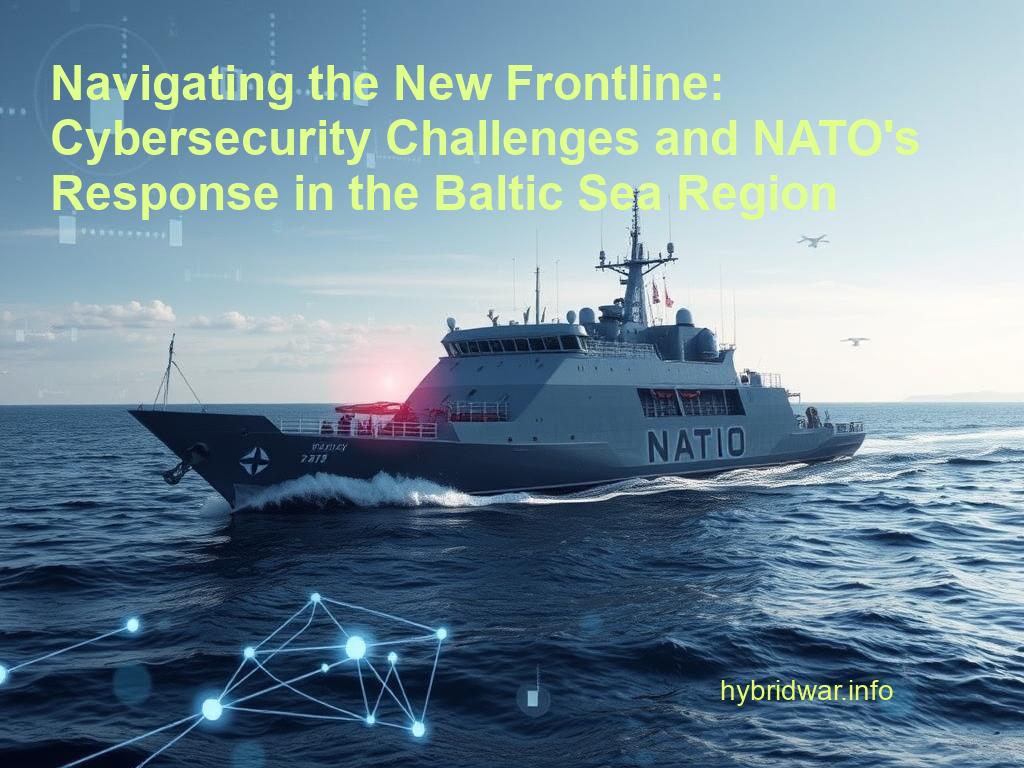
Navigating the New Frontline: Cybersecurity Challenges and NATO’s Response in the Baltic Sea Region

Introduction: The Increasing Significance of the Baltic Sea in Hybrid Warfare

In recent years, the Baltic Sea has evolved from merely a strategic maritime route to a critical flashpoint in the evolving landscape of hybrid warfare. The integration of traditional military tactics with cyber operations, disinformation campaigns, and covert sabotage has made this region a hotspot for both state and non-state actors. Notably, the convergence of cyber and physical threats has raised urgency among regional stakeholders, prompting major security alliances like NATO to redefine their defense postures. The destabilizing effects are not limited to military implications; when vital undersea infrastructure such as communication and power cables are targeted, the ripple effects can undermine economic stability, energy security, and public trust in governmental capabilities.

Recent Incidents: Undersea Cable Damages and Cyber Espionage Tactics

The Baltic Sea’s undersea infrastructure has recently been subject to unprecedented acts of sabotage. Perhaps the most notable incident occurred in December 2024, when the Estlink 2 power cable linking Finland and Estonia sustained severe damage. Finnish authorities suspect that the rupture was incurred by the oil tanker Eagle S, allegedly part of Russia’s so-called “shadow fleet.” Reports indicate that the tanker, as documented on [Wikipedia](https://en.wikipedia.org/wiki/2024_Estlink_2_incident?utm_source=openai), might have dragged its anchor across the seabed, inadvertently or intentionally severing the cable. This incident is a stark reminder of how maritime assets can be repurposed or misused to achieve covert strategic objectives.

Adding to the complexity, in November 2024, two submarine cables—BCS East-West Interlink and C-Lion1—were damaged under circumstances that pointed towards intentional sabotage. Investigations highlighted the presence of the Chinese vessel Yi Peng 3 near the damage sites. Such events, detailed on [Wikipedia](https://en.wikipedia.org/wiki/2024_Baltic_Sea_submarine_cable_disruptions?utm_source=openai), not only intensify mistrust among regional players but also underline the sophisticated level of espionage and covert operations that characterize modern hybrid warfare.

NATO’s ‘Baltic Sentry’ Mission: Strategies, Deployment, and Impact

Recognizing the severity of these threats, NATO has taken strategic steps to reinforce the region’s security. The introduction of the ‘Baltic Sentry 2025’ mission signifies a comprehensive approach to securing the Baltic Sea region. This mission focuses on enhanced surveillance, improved cross-border intelligence sharing, and the coordinated deployment of specialized maritime assets. As part of the mission, NATO has increased the use of Airborne Early Warning and Control (AWAC) systems, unmanned aerial vehicles (UAVs), and mine hunters to monitor and secure critical undersea infrastructure. Details on these strategic shifts can be found on [NATO’s official review](https://www.nato.int/docu/review/articles/2024/08/28/reinforcing-resilience-natos-role-in-enhanced-security-for-critical-undersea-infrastructure/?utm_source=openai) and [VOA News](https://www.voanews.com/a/nato-eu-on-high-alert-as-undersea-cable-attacks-escalate-in-baltic/7956600.html?utm_source=openai).

The comprehensive planning and execution of the Baltic Sentry mission serve multiple purposes: deterring potential saboteurs, assuring member nations of rapid response capabilities, and providing a robust framework for future adaptations against new methodologies of hybrid warfare. The long-term impact is expected to not only secure infrastructure but also foster a sense of resilience among Baltic nations.

The Role of Cyberattacks and Disinformation Campaigns in Hybrid Warfare

Beyond physical sabotage, cyberattacks and disinformation campaigns have become increasingly integrated with traditional military confrontations in the Baltic Sea region. Cyber operations targeting critical infrastructure, government agencies, and communication networks serve to create confusion and undermine public trust. When cyberattacks are combined with strategic disinformation, adversaries can mask their true intentions and create a multilayered threat environment that complicates defensive responses.

Disinformation plays a dual role in hybrid warfare. It not only sows discord among allies but also acts as a force multiplier in physical confrontations by misdirecting intelligence efforts and eroding confidence in defensive measures. As various states invest in social media platforms and other digital channels for strategic messaging, the ability to control, counter, or manipulate narratives becomes pivotal in shaping both domestic and international policies.

Artificial Intelligence and Machine Learning in Cyber Defense

The complexity and volume of modern cyber threats have necessitated the deployment of advanced technological solutions. Artificial Intelligence (AI) and Machine Learning (ML) have rapidly ascended as essential components of cyber defense systems. These technologies enhance the ability to detect anomalous activities, predict potential cyber intrusions, and respond to threats in near real-time. NATO’s proactive steps towards embracing AI in their cyber defense strategies are largely facilitated by institutions such as the NATO Cooperative Cyber Defence Centre of Excellence (CCD COE) in Tallinn, Estonia. The CCD COE has been leading research and development efforts since its inception in 2008, and its initiatives include developing AI-driven tools for threat detection, incident response, and mitigation.

By integrating AI and ML into their operational frameworks, NATO aims not only to automate defensive measures but also to systematically improve their response times against cyber onslaughts. The synergy between human expertise and machine efficiency creates a robust paradigm of defense that is both adaptive and resilient. This integration is well documented on [Wikipedia’s page for the Cooperative Cyber Defence Centre of Excellence](https://en.wikipedia.org/wiki/Cooperative_Cyber_Defence_Centre_of_Excellence?utm_source=openai).

Evaluating NATO’s Response Effectiveness and Future Challenges

NATO’s multifaceted response to hybrid and cyber warfare in the Baltic Sea region has been both comprehensive and dynamic. The deployment of enhanced surveillance technologies, the initiation of the Baltic Sentry mission, and the incorporation of AI and ML strategies form a robust response to contemporary threats. However, the nature of hybrid warfare is continuously evolving, and so too must NATO’s strategies. The challenges ahead include rapidly adapting to new threat vectors, maintaining seamless cooperation among member states, and ensuring that defense measures keep pace with the increasingly sophisticated techniques employed by adversaries.

While NATO’s increased presence and strategic initiatives have provided reassurance, the alliance must continuously refine its operational doctrines and invest in emerging technologies. Future challenges also include countering the proliferation of cyber capabilities among non-state actors and addressing the persistent threat of state-sponsored hybrid attacks. Independent analyses, such as those found in recent reports by Reuters and the Financial Times, emphasize that while progress has been made, the evolving threat landscape demands vigilance and continual innovation.

Legal, Ethical, and Political Considerations in Cyber Warfare

The rapid evolution of cyber and hybrid warfare has inevitably raised several legal, ethical, and political questions. Legally, the attribution of cyberattacks remains fraught with challenges—identifying the perpetrator or establishing sufficient evidence for international prosecutorial measures is no small feat. Ethically, the use of cyber tactics that can result in civilian hardship or economic instability calls into question the proportionality and humanitarian implications of such strategies.

Politically, alliances like NATO must navigate the complex interplay between national sovereign interests and collective security imperatives. The implementation of countermeasures against cyber threats while adhering to international law requires a delicate balance between assertiveness and diplomacy. As the international community scrutinizes the measures taken in response to incidents like the 2024 Baltic Sea cable disruptions, it becomes clear that reinforcing legal frameworks and ethical guidelines will be as important as technical upgrades in maintaining legitimacy and effectiveness.

Broader Implications for Regional Stability and International Security

The repercussions of ongoing hybrid warfare extend far beyond immediate military concerns. Economic ramifications, such as those following the targeted disruptions of critical undersea cables, can have a cascading effect on energy supplies, financial markets, and overall regional stability. The Baltic Sea incidents not only highlight vulnerabilities in physical infrastructure but also expose the interconnected nature of modern security challenges—from cyber intrusions to geopolitical maneuvering.

International security now hinges on sustained collaboration among countries, robust intelligence sharing, and strategic investments in advanced technologies. The ripples of these incidents force a reevaluation of security paradigms that once centered solely on physical borders. As nations build resilience against multifaceted attacks, a comprehensive defense strategy must intertwine cyber security, diplomatic coordination, and economic safeguards. This integrated approach is increasingly recognized as essential for preserving the long-term stability of not just the Baltic region, but the wider international community.

Conclusion: Strengthening Resilience and Future Outlook

In summary, the evolving landscape of hybrid and cyber warfare in the Baltic Sea region represents both an unprecedented challenge and a call to innovative action. The increasing prevalence of undersea cable sabotage, cyber espionage, and associated disinformation campaigns necessitates a reevaluation of defense strategies. NATO’s response—anchored by the Baltic Sentry mission and bolstered by the integration of artificial intelligence and advanced surveillance capabilities—demonstrates a commitment to safeguarding the region’s critical infrastructure and maintaining stability.

Yet, looking to the future, the complex interplay of legal, ethical, and political factors will require constant vigilance and adaptive strategies. Strengthening resilience will depend on the continuous evolution of technical defenses, enhanced cooperation among international partners, and a renewed focus on developing comprehensive legal frameworks for cyber operations. By learning from recent incidents and remaining agile in the face of emerging threats, European security stakeholders can pave the way for a safer, more stable future.

For further reading on the subject, consider exploring related reports such as [Sweden seizes vessel suspected of ‘sabotage’](https://apnews.com/article/63da5ef0d577bca12bbe118d527d3a14?utm_source=openai), [Subsea sabotage puts European power at risk](https://www.ft.com/content/6c5c1c02-06b1-4ce7-a7e8-24ed5b2ac171?utm_source=openai), and [Finland completes probe into Baltic Sea cable damage](https://www.reuters.com/business/media-telecom/finland-completes-probe-into-baltic-sea-cable-damage-suspects-tanker-crew-2025-06-13/?utm_source=openai). These sources provide additional context and depth to the challenges and responses detailed in this blog post.

Leave a reply

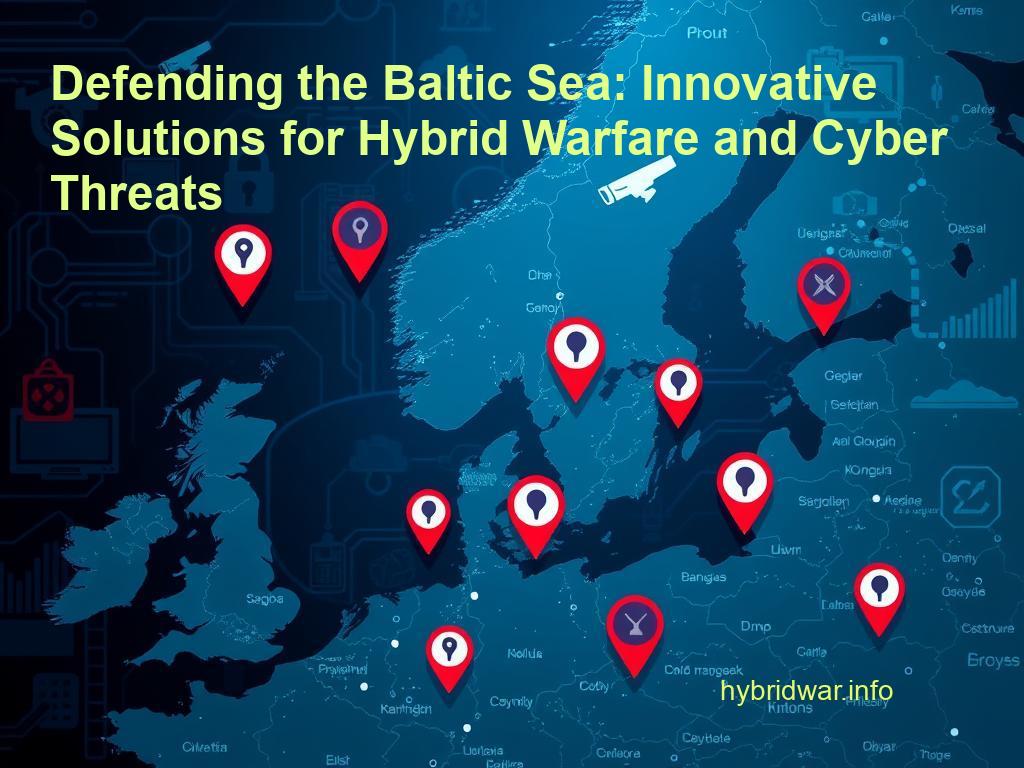
Defending the Baltic Sea: Innovative Solutions for Hybrid Warfare and Cyber Threats

Introduction: The Growing Threat Landscape in the Baltic Sea Region

In recent years, the Baltic Sea region has transitioned from a peaceful international maritime corridor to a zone facing complex and evolving security challenges. Hybrid warfare—a multifaceted blend of conventional and unconventional tactics—has emerged as a key method to weaken regional stability. The hybrid threat encompasses everything from cyberattacks and physical sabotage to psychological operations and disinformation campaigns. These tactics are deliberately designed to impose uncertainty, erode public trust in institutions, and undermine critical infrastructure, which has historically been a cornerstone of both regional prosperity and security. The Baltic Sea, with its strategic position and dense network of undersea cables, pipelines, and energy grids, is especially vulnerable to such multifarious threats.

Understanding Hybrid Warfare: Definitions and Key Tactics

Hybrid warfare is not solely a military engagement; it is a complex strategy that blends kinetic military actions with asymmetrical tactics. It also involves an extensive use of tactical deception, economic measures, cyber manipulation, and information operations. Elements of hybrid warfare include:

1. Cyberattacks – targeting digital infrastructures to disrupt services and intimidate the public.
2. Sabotage – physical attacks on critical infrastructure like undersea cables and pipelines.
3. Disinformation campaigns – the deliberate spread of misleading narratives to fracture political consensus and public trust.

These elements often work in unison to create a strategic environment where adversaries gain both operational and psychological advantages. For further details on the nuances of hybrid warfare, recent explorations into gray zone tactics (as seen in articles discussing undersea cable sabotage and cyberattacks, such as the piece on the UK’s defense law revamp [UK Defense Laws Revamp](https://www.pcgamer.com/hardware/uk-looking-to-revamp-defense-laws-as-undersea-cable-sabotage-and-cyber-attacks-create-gray-zone-threats/?utm_source=openai)) have shed light on the intricate interplay of these tactics.

Recent Incidents Highlighting Vulnerabilities

Recent events have starkly highlighted the tangible nature of these cyber and physical threats. Notably:

– In December 2024, the Estlink 2 submarine power cable, which connects Estonia with Finland, experienced an unplanned failure. The incident, reducing the cross-border capacity dramatically from 1,016 to 358 MW, is widely suspected of being a deliberate act of sabotage. Reports suggest that the oil tanker Eagle S, allegedly linked to Russia’s shadow fleet, might have intentionally damaged the cable by dragging its anchor. This episode underscores how even routine maritime operations can be manipulated into acts of hybrid warfare. More on the incident can be found at [2024 Estlink 2 incident](https://en.wikipedia.org/wiki/2024_Estlink_2_incident?utm_source=openai).

– Similarly, in October 2023, damage to the Balticconnector—a gas pipeline interlaced with telecommunication cables linking Finland and Estonia—brought the vulnerability of such critical infrastructures into sharp focus. Although the container ship NewNew Polar Bear was initially reported to have caused accidental damage by its anchor, ongoing investigations by Estonian and Finnish authorities suggest that these incidents might not be purely coincidental. More detailed information about this disruption is available at [Balticconnector](https://en.wikipedia.org/wiki/Balticconnector?utm_source=openai).

These developments have made it clear that the Baltic Sea’s undersea infrastructure is not immune from the modern techniques of hybrid warfare. In response, initiatives such as NATO’s Baltic Sentry mission have been rolled out to protect against sabotage by deploying a mix of naval drones, submarines, maritime patrol ships, and aircraft.

Critical Infrastructure at Risk: Undersea Cables and Pipelines

Undersea cables and pipelines form the lifelines for energy transfer and digital communication in the Baltic Sea region, yet they are increasingly susceptible to both deliberate sabotage and accidental damage. Their strategic importance makes them prime targets for adversaries employing hybrid warfare tactics.

Recent incidents illustrate this vulnerability vividly. The intentional damage of the Estlink 2 cable and Balticconnector pipeline has highlighted how physical manipulation amid routine maritime operations can be weaponized to achieve geopolitical goals. The integration of these facilities in everyday economic and energy networks means that any disruption can have far-reaching consequences, potentially crippling industries and inhibiting cross-border collaboration.

To counter these risks, monitoring and reinforcing strategies are being considered. Defense projects such as autonomous sensor networks and AI-powered surveillance systems can potentially provide continuous monitoring and early warning signals to detect and counteract intrusions or sabotage attempts. NATO’s Baltic Sentry, for instance, is actively developing measures to protect these infrastructures by harnessing a blend of advanced maritime monitoring technologies ([NATO Baltic Sentry](https://www.ft.com/content/3447d821-ea41-4c85-b403-e7cc7cc49b4c?utm_source=openai)).

Cyberattacks on Government and Energy Sectors

While physical sabotage of infrastructure remains a significant threat, the digital dimension of hybrid warfare is becoming even more critical. Cyberattacks on government networking systems, energy grids, and industrial operations have the potential to paralyze essential services, allowing manipulation of information flow and operational capacities at a large scale.

Government entities and energy supply chains are particularly vulnerable due to legacy systems, underinvestment in cybersecurity, and complex interdependencies between various networked infrastructures. An attack on one element can rapidly cascade, affecting entire sectors. Developers and innovators are recognizing an urgent need for AI-driven cybersecurity tools that can monitor threats in real time, identify breaches as they happen, and neutralize risks before serious consequences manifest.

The incident discussions in the news regarding the wave of cyberattacks targeting critical sectors in Europe also suggest that proactive and intelligent cybersecurity measures are not just beneficial but essential for maintaining state and economic integrity ([Western Officials on Sabotage in Europe](https://apnews.com/article/d61887dd3ec6151adf354c5bd3e6273e?utm_source=openai)).

The Role of Disinformation and Influence Campaigns

Disinformation has evolved into an indispensable tool in the hybrid warfare playbook. In the Baltic Sea region, where public opinion can be shaped as much by digital narratives as by physical events, the strategic release of inaccurate or misleading information can destabilize societies and political processes.

State and non-state actors alike use social media, online forums, and other digital platforms to disseminate false information, thereby eroding trust in governmental institutions and inciting public unrest. One notable example is the use of AI-driven platforms, like Cyabra, which specialize in detecting and counteracting disinformation by identifying fake profiles and harmful narratives. For more details on Cyabra and its operations, you can refer to [Cyabra](https://en.wikipedia.org/wiki/Cyabra?utm_source=openai).

The effects of disinformation are compounded in the digital era where rapid, unchecked information-sharing has become a norm. With the increasing use of AI tools in both propagating and detecting disinformation, the stakes for maintaining information integrity have never been higher.

Opportunities for Defense Industry Startups

The evolving threat landscape in the Baltic region is not without opportunity. For startups in the defense industry, it represents a fertile ground for innovation, particularly in technologies designed to secure critical infrastructures and counteract hybrid warfare tactics. These companies can play a pivotal role in developing next-generation security solutions that integrate advanced AI, robotics, and networked communication systems.

Innovative defenses such as autonomous surveillance drones, undersea cable monitoring systems, and predictive cybersecurity models have already begun attracting significant attention. Collaborations between governments, established defense contractors, and agile startups are essential to bridge gaps in current technology and counteract sophisticated threats. Startups that excel in agile development and rapid deployment, particularly in AI and robotics, are poised to design customized solutions capable of responding to the unique regional challenges.

Innovative Technologies for Infrastructure Protection

Innovation in technology is the foremost ally in the fight against hybrid threats. With the advent of robust AI-driven platforms, detecting anomalies in communication networks and energy grids has become more feasible and efficient. One example is the utilization of machine learning models that continually assess risk factors and predict potential points of failure or sabotage on critical infrastructures.

Additionally, the integration of autonomous systems, such as the Danish military’s use of robotic sailboats (often referred to as “Voyagers”) for maritime surveillance, offers a glimpse into the future of infrastructure protection. These uncrewed vessels are equipped with state-of-the-art sensors that can detect subtle changes in the maritime environment, providing continuous monitoring and rapid threat response ([Danish Robotic Sailboats](https://apnews.com/article/bfa31c98cf7c93320115c0ad0e6908c5?utm_source=openai)).

Such advancements underscore the importance of continuous investment in R&D not just to patch existing vulnerabilities, but to foresee and preempt future threats. The infusion of automated systems with traditional monitoring methods creates layered security that is essential in the increasingly contested Baltic maritime environment.

Counter-Disinformation Strategies and Tools

Addressing the digital component of hybrid warfare requires an equally advanced set of countermeasures. Innovative platforms that harness the power of artificial intelligence can detect, debunk, and ultimately neutralize disinformation in real time. These tools work by analyzing vast streams of data for patterns that indicate coordinated inauthentic behavior.

The success stories of platforms like Cyabra highlight the potential of AI-driven disinformation countermeasures. By quickly identifying and flagging harmful content, these systems safeguard the public discourse from manipulation and help rebuild trust in authentic information streams. They are also a critical resource for governments and private sectors seeking to combat the sustained flow of fake news and manipulated narratives.

Constant adaptation is necessary, as adversaries continuously evolve their methods. Integrating counter-disinformation measures into broader cybersecurity strategies ensures that digital defenses remain robust and responsive.

Building Collaborative Defense Platforms

No single organization can effectively counter the multifaceted threats posed by hybrid warfare. Collaborative defense platforms that bring together national governments, NATO allies, private-sector innovators, and academic researchers are crucial. These platforms foster information sharing and a coordinated response to emerging threats, leveraging collective expertise.

Such collaboration could lead to the development of joint operational centers that centralize threat assessments and streamline responses, particularly in high-stakes scenarios involving critical infrastructure attacks. This harmonized approach not only fosters trust among partners but also ensures that resources are allocated efficiently to where they are needed most.

Recent NATO initiatives, including the Baltic Sentry mission, provide a model for such cooperation by integrating various assets—ranging from unmanned systems to advanced surveillance tools—into a cohesive defensive posture. This coordinated strategy is essential to counter the hybrid threats effectively and ensure resilience.

Future Outlook: Strengthening Regional Resilience

Looking ahead, the challenges in the Baltic Sea region are set to intensify, but so too are the opportunities for technological and strategic advancements. As hybrid warfare tactics grow in sophistication, a proactive and innovative approach will be critical.

Key to future resilience is the continued investment in advanced monitoring systems, cybersecurity defenses, and collaborative platforms that quickly adapt to emerging threats. The integration of multi-domain capabilities—from physical surveillance using robotic assets to real-time data analytics using AI—will be pivotal.

Governments, defense industries, and private startups must work together to cultivate an environment where innovation meets necessity. By leveraging technological advancements and collaborative partnerships, the Baltic Sea region can transform its vulnerabilities into strengths, ensuring that it remains secure against both current and future hybrid threats.

In conclusion, addressing the hybrid warfare threats prevailing in the Baltic Sea region requires comprehensive measures that span both physical and digital arenas. From undersea cables and pipelines to sophisticated cyber defenses and counter-disinformation tools, the path forward lies in partnerships and innovative technology solutions. By harnessing the expertise and agility of defense startups alongside established government initiatives, the region can enhance its resilience and safeguard its critical infrastructure in the face of evolving hybrid challenges.